
Design and modelling of gutters, downpipes, and water conveyance systems to manage flow and mitigate flood risks.
Hydraulic modelling and design of fire protection systems, including sprinklers, hydrants, and suppression systems.
End-to-end design for drinking water, sanitary drainage, and gas systems in built environments.
High-efficiency hydraulic networks for industrial, commercial, and municipal infrastructure.
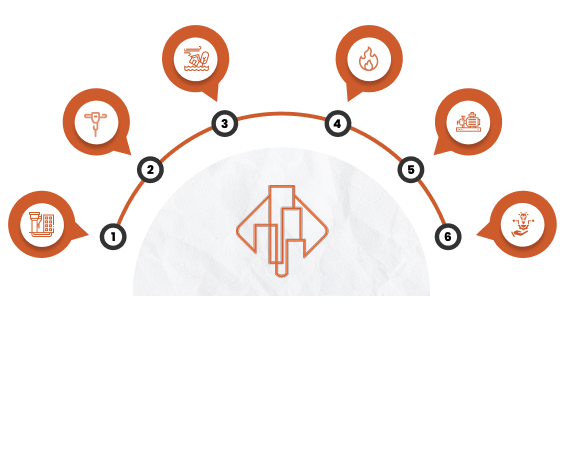
Design and optimisation of pumping stations, pipeline routes, and supporting infrastructure.
Seamless coordination with structural, mechanical, civil, and environmental systems for cohesive project delivery.

Design and modelling of gutters, downpipes, and water conveyance systems to manage flow and mitigate flood risks.

Hydraulic modelling and design of fire protection systems, including sprinklers, hydrants, and suppression systems.

End-to-end design for drinking water, sanitary drainage, and gas systems in built environments.

High-efficiency hydraulic networks for industrial, commercial, and municipal infrastructure.

Design and optimisation of pumping stations, pipeline routes, and supporting infrastructure.

Seamless coordination with structural, mechanical, civil, and environmental systems for cohesive project delivery.
In collaboration with Ashburner Francis, Precision Civil and Hydraulic Engineering redesigned fire sprinklers, water services, and drainage systems within Relay Newsagents to suit a new building layout. The project enhanced safety, efficiency, and compliance with Australian Standards, reinforcing the airport’s commitment to operational excellence and passenger wellbeing.
Darwin International Airport – Hydraulic Services Upgrade for Relay Newsagents
Project Overview
In 2024, Darwin International Airport embarked on a targeted upgrade of hydraulic systems within its Relay Newsagents to align with a new internal layout. Precision Civil and Hydraulic Engineering collaborated with Ashburner Francis to deliver a robust, efficient solution tailored to the airport’s evolving operational needs.
Scope of Work
The project scope focused on the design and integration of key hydraulic systems, including fire sprinklers, potable water supply, and sanitary drainage. Each system was strategically engineered to fit the reconfigured space and support continuous, safe operations.
Key Challenges & Solutions
Meeting high safety and performance standards in a live airport environment required a solution-focused approach. Fire sprinklers were redesigned to maximize coverage and improve emergency responsiveness. Water services were reengineered to maintain
consistent supply and pressure across all zones. The drainage network was adapted to support the new footprint, reinforcing hygiene and operational efficiency.
Design Methodology & Standards
All systems were designed in full compliance with Australian Standards AS3500.1, AS3500.2, and AS2118.1. Precision and technical rigor guided every phase, ensuring outcomes that met both regulatory requirements and stakeholder expectations.
Outcome
The successful delivery of this project showcases Darwin International Airport’s proactive infrastructure strategy and its commitment to safety and service excellence. The seamless collaboration between Precision Civil and Hydraulic Engineering and Ashburner Francis ensured an effective and durable solution, reinforcing long-term operational resilience.
Infuse some create design elements –using the logo as inspiration
Precision Civil and Hydraulic Engineering assessed Royal Darwin Hospital’s sewer network to evaluate current capacity and plan for projected 15-year demand. Key findings highlighted high discharge from laundry facilities and undersized access chambers. Strategic upgrade recommendations focused on improving system flow, expanding capacity, and aligning with long-term infrastructure needs.
Royal Darwin Hospital – Sewer System Investigations and Upgrade Consultancy
Location: Darwin
Client: Department of Infrastructure, Planning and Logistics
Year: 2024
Project Overview
In 2024, Precision Civil and Hydraulic Engineering was engaged by the Department of Infrastructure, Planning and Logistics to conduct a detailed assessment of the existing sewer system at Royal Darwin Hospital. The objective was to evaluate current performance, identify capacity constraints, and provide forward-looking recommendations to support projected growth over the next 15 years.
Scope of Work
The consultancy covered a range of interrelated investigations, including:
Key Findings
Recommendations
Outcome
The project delivered a clear roadmap for sewer system upgrades, ensuring Royal Darwin Hospital remains equipped to support growing healthcare demand. Precision Civil and Hydraulic Engineering’s consultative approach provided the Department with reliable, data-driven insights to inform infrastructure planning with confidence.
Precision Civil and Hydraulic Engineering designed and documented the replacement of critical systems at Stuart Park Primary, including fire mains, drinking water, irrigation, and trade waste. Addressing asbestos pipe replacement and active site constraints, the project was delivered to AS3500 and AS2419.1 standards, with approvals from NTFRS, PWC Trade Waste, and Cardno Building Certification.
Stuart Park Primary School – Utility Infrastructure Design & Replacement
Location: Stuart Park, Darwin
Client: Department of Planning, Infrastructure and Logistics
Year: 2023
Project Overview
In 2023, Precision Civil and Hydraulic Engineering was commissioned to design and document the replacement of essential utility infrastructure at Stuart Park Primary School. The project encompassed fire mains and hose reels, a drinking water supply, irrigation ring main, trade waste system, and a new water meter assembly to modernize and future-proof the site’s hydraulic systems.
Scope of Work
The scope involved the comprehensive design of:
The design phase adhered to Australian Standards AS3500.1, AS3500.2, and AS2419.1 and included approvals from the NT Fire and Rescue Service (NTFRS), Power and Water Corporation (PWC) Trade Waste, and building certification from Cardno.
Key Challenges & Solutions
The project required the safe removal and replacement of asbestos-embedded water mains—a critical risk mitigated through rigorous safety protocols. Additionally, executing works within an operational school environment called for precise planning and staged delivery to minimize disruption to students and staff.
Design Methodology & Standard
All components were designed to meet stringent compliance with Australian hydraulic and fire protection standards. Strategic phasing ensured that safety and operational continuity remained central throughout delivery.
Outcome
The successful completion of this project provided Stuart Park Primary School with a robust, compliant, and future-ready utility infrastructure. It reflects Precision Civil and Hydraulic Engineering’s commitment to delivering reliable solutions in complex, occupied environments.
Precision Civil and Hydraulic Engineering, alongside Ashburner Francis and Cardno, upgraded fire mains, sprinklers, and pump systems at Ben Hammond Workshop. Addressing combustible material hazards, the project met AS2419, AS2118, and AS/NZS 3000
standards. Key outcomes included enhanced fire safety, NTFRS sign-off, and improved operational compliance.
Ben Hammond Complex – Fire Sprinkler and Hydrant System Upgrades
Location: Woolner, Darwin
Client: Mugavin
Sub-Consultants: Ashburner Francis, Cardno
Year: 2019
Project Overview
Precision Civil and Hydraulic Engineering led the upgrade of fire protection systems at the Ben Hammond Main Workshop in Darwin, with support from Ashburner Francis and Cardno. The project aimed to modernize fire safety infrastructure in a high-risk industrial environment, enhancing compliance and resilience for facilities storing flammable and hazardous materials.
Scope of Work
The project involved a multi-disciplinary approach to implement:
Key Challenges & Solutions
The live nature of the facility and its hazardous materials posed significant challenges. The team employed a phased implementation strategy to maintain operational safety, combined with thorough risk assessments and precision design to ensure effective, compliant fire suppression tailored to site-specific needs.
Design Methodology & Standard
Designs followed Australian Standards AS2419, AS2118, and AS/NZS 3000 for fire and electrical systems. Hydraulic modelling and spatial analysis ensured comprehensive coverage and effective hazard mitigation across all workshop zones.
Outcome
The project successfully delivered a robust fire protection infrastructure aligned with modern safety regulations. It significantly improved emergency readiness and minimized risk in a complex industrial setting. Ongoing recommendations include routine inspections, staff training, and performance audits to ensure long-term system reliability.
Precision Civil and Hydraulic Engineering delivered a full hydraulic design for Lily Lagoon Resort’s new restaurant, including water supply, sanitary drainage, and gas systems. Navigating low water pressure and remote conditions, the team optimised material selection and integrated existing services to reduce costs. The project was completed to AS3500 and AS5601 standards, ensuring long-term performance and compliance.
Lily Lagoon Resort – Restaurant Hydraulic Design
Location: 50 Casuarina Way, Kununurra
Client: EDK Architect
Year: 6 months
Project Overview
Precision Civil and Hydraulic Engineering was engaged to deliver a comprehensive hydraulic design for the new restaurant facility at Lily Lagoon Resort in Kununurra. The project aimed to create a robust and efficient water, waste, and gas infrastructure to support the operational needs of a modern hospitality venue—ensuring service continuity, regulatory compliance, and guest comfort in a remote location.
Scope of Work
The scope of services included:
Key Challenges & Solutions
Kununurra’s remote setting and characteristically low water pressure posed significant design challenges. Our team collaborated closely with the project plumber to select
materials that balanced cost-efficiency with performance. Strategic design decisions ensured optimal use of existing site services, reducing the need for extensive new infrastructure.
Design Methodology & Standard
All systems were designed in accordance with Australian Standards:
Outcome
The project successfully delivered a resilient, compliant, and cost-conscious hydraulic framework for the resort’s restaurant facility. It supports long-term operational reliability and sustainability, tailored to the needs of a remote hospitality setting.
Location: Palmerston, Northern Territory
Client: BMD
Project Duration: 2021 – 2023
Scope of Work
The project involved civil inspection and supervision services for the staged development of the Zuccoli 3.5, 3.6, and 3.7 subdivisions. The scope included:
Inspection of stormwater, sewer, and water infrastructure.
Supervision of road formation, kerb installation, and subsoil drainage.
Pre-pour and post-pour inspections for concrete works.
Testing and verification of sewer vacuum systems and water mains.
Monitoring of erosion control measures and retaining wall construction
Key Activities and Milestones
Stage 3.5: Earthworks, kerb pours, and subgrade proof rolls began in early 2022.
Stage 3.6: Included sewer and stormwater inspections, pressure testing of water mains, and subsoil drainage for retaining walls.
Stage 3.7: Focused on stormwater trenching, open channel installation, and road base proof rolls
Technical Highlights
Multiple sewer vacuum tests and water pressure tests were conducted to ensure compliance with NT utility standards. Reinforcement inspections for culverts and stormwater pits were carried out at various stages. The project required coordination with Power and Water Corporation (PWC) for service inspections.
Challenges
Weather-related delays impacted inspections and site access, particularly during the wet season. Coordination of multiple subcontractors and staged works required ongoing site presence and flexible scheduling.
Project Overview
The Bundilla Park project at Vesty Beach, Darwin, involved the design of a comprehensive irrigation system to support the park’s renovation and long-term public use. The objective was to enhance usability, sustainability, and infrastructure resilience while aligning with local standards and community needs.
Scope of Work
The design scope included site investigation, hydraulic and irrigation systems, and utilities integration. A key component was the irrigation system, incorporating pumps and tanks to ensure adequate flow and minimise overspray and water usage, modelled on the City of Darwin’s standards.
Key Challenges & Solutions
Challenges included terrain constraints and the need to comply with Darwin irrigation guidelines, which limit the irrigation system to the same system that is used in other parks around Darwin. These were addressed through adaptive design strategies and close coordination with stakeholders to ensure compliance and functionality.
Design Methodology & Standards
The project followed national codes and the City of Darwin’s irrigation manual, ensuring structural integrity and efficient water use. Engineering models were applied to optimize layout and performance.
Outcome & Recommendations
The project was successfully completed, and Bundilla Park is now open to the public.